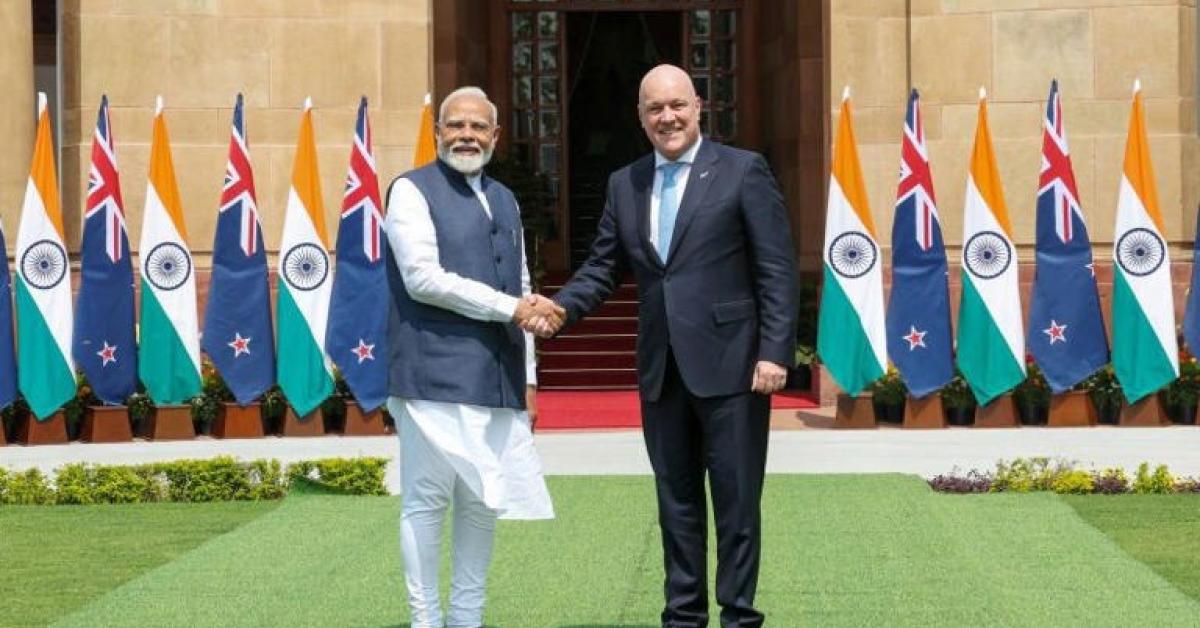

New Zealand Prime Minister Christopher Luxon has strongly defended the proposed Free Trade Agreement (FTA) with India, saying the deal will generate more jobs, higher incomes and increased exports, even as Foreign Minister Winston Peters has publicly objected to the agreement.
Luxon said the FTA would open up access to India’s vast consumer market of nearly 1.4 billion people, offering significant opportunities for New Zealand businesses. “This agreement is about more jobs, more income and more opportunities for New Zealanders,” the prime minister said, describing the pact as a key step in strengthening economic ties with one of the world’s fastest-growing major economies.
The agreement, finalised after months of negotiations, aims to reduce trade barriers, expand market access and deepen cooperation in goods, services and investment. Bilateral trade between India and New Zealand is expected to rise substantially once the deal is implemented.
However, the FTA has exposed differences within New Zealand’s coalition government. Foreign Minister Winston Peters, who also leads the New Zealand First party, has criticised the agreement, calling it “neither free nor fair.” He raised concerns that the deal does not sufficiently protect New Zealand’s core export sectors, particularly dairy, which continues to face high tariff barriers in the Indian market.
Peters has also questioned labour-related provisions in the agreement, warning that they could disadvantage domestic workers and undermine local industries. His remarks underline internal political tensions as the government balances economic diplomacy with domestic interests.
Despite the criticism, Luxon maintained that the FTA serves New Zealand’s long-term strategic and economic interests, especially in the Indo-Pacific region. He said engaging more deeply with India was essential for diversifying trade and reducing dependence on traditional markets.
The agreement is expected to be formally signed in early 2026, followed by ratification processes in both countries. While India has welcomed the pact as a step toward strengthening bilateral economic cooperation, the debate within New Zealand highlights the challenges governments face in securing consensus on major trade agreements.
- Log in to post comments