
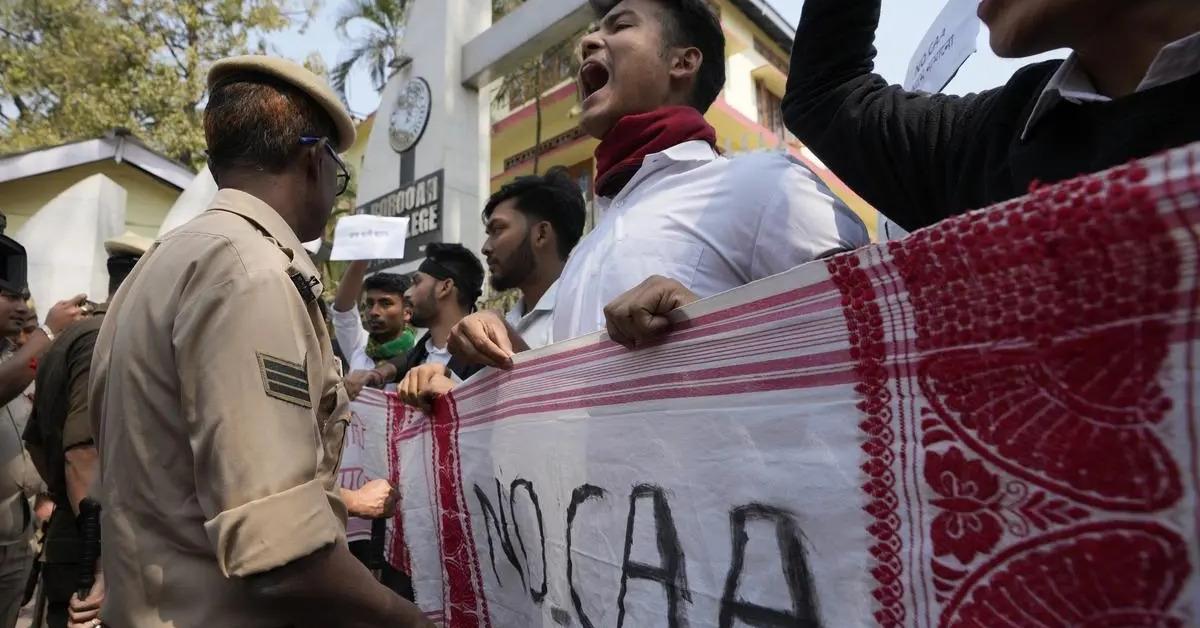

With the 2026 Assam Assembly elections approaching, concerns over the implementation of the Citizenship Amendment Act (CAA) are growing among sections of the Hindu Bengali community in the state, particularly in the Barak Valley.
Despite the Centre notifying the rules of the Act in 2024, only a limited number of applicants have reportedly been granted citizenship so far. This has led to uncertainty among many who had expected the law to provide a clear pathway to legal status.
Members of the community say confusion persists regarding eligibility criteria, documentation requirements and the timeline for approval. Instead of offering reassurance, the slow pace of implementation has contributed to renewed anxiety over citizenship status.
The issue is closely tied to the earlier National Register of Citizens (NRC) exercise, which excluded a significant number of residents, including Bengali Hindus. Many had viewed the CAA as a corrective measure, but delays in granting citizenship have raised doubts about its effectiveness.
Political parties are expected to leverage the issue during the upcoming elections. While the ruling alliance has defended the law as a humanitarian measure aimed at protecting persecuted minorities, opposition parties have questioned both its implementation and its impact in Assam.
Citizenship and identity have long been sensitive issues in the state, shaped by decades of debate over migration and indigeneity. For many Bengali Hindus, these concerns remain deeply personal, making the current uncertainty around the CAA a significant electoral factor.
As campaigning gathers momentum, the extent to which these concerns are addressed by political stakeholders may influence voter sentiment in several constituencies across Assam.
- Log in to post comments