
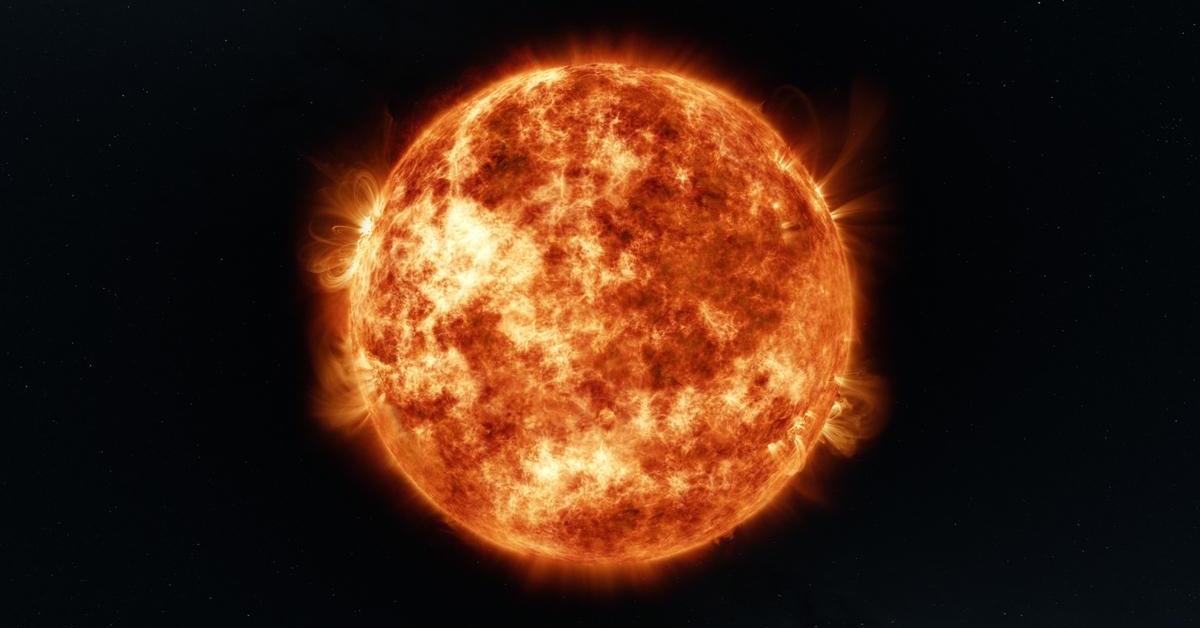

A study by researchers from Tezpur University has offered new insights into the tremor-like oscillations observed on the Sun’s surface, advancing understanding of how energy is transported within the star.
The findings, published in The Astrophysical Journal, focus on solar oscillations—rhythmic vibrations that continuously ripple across the Sun’s surface and are crucial to understanding its internal dynamics.
Scientists have long studied these oscillations, often referred to as “solar tremors,” as they help reveal the processes occurring beneath the Sun’s visible surface. However, the mechanisms governing how these waves carry and dissipate energy have remained only partially understood.
The research team developed a theoretical model highlighting the role of high-energy, nonthermal electrons in influencing these oscillations. According to the study, the presence of such energetic particles can significantly alter the behaviour of solar waves, particularly pressure-driven oscillations known as p-modes.
The study suggests that an increase in high-energy particles may weaken these oscillations, indicating that solar tremors are not uniform but are shaped by complex interactions within the Sun’s plasma environment.
The researchers also proposed a mechanism explaining how energy transported by these waves gradually diminishes as it travels through the Sun’s atmospheric layers. Rather than dissipating abruptly, the energy fades due to a combination of magnetic influences and atmospheric conditions.
Significantly, the study points out that certain high-frequency oscillations may carry more energy than previously estimated. This could contribute to explaining the long-standing mystery of why the Sun’s outer layers, such as the chromosphere and corona, are significantly hotter than its surface.
Experts believe the findings could have wider implications for space science, particularly in improving predictions of solar activity, including solar flares and storms that can affect satellite operations, communication systems, and power infrastructure on Earth.
The study marks a notable contribution from Assam’s scientific community to global solar research, offering a deeper understanding of the dynamic processes governing the Sun.
- Log in to post comments