
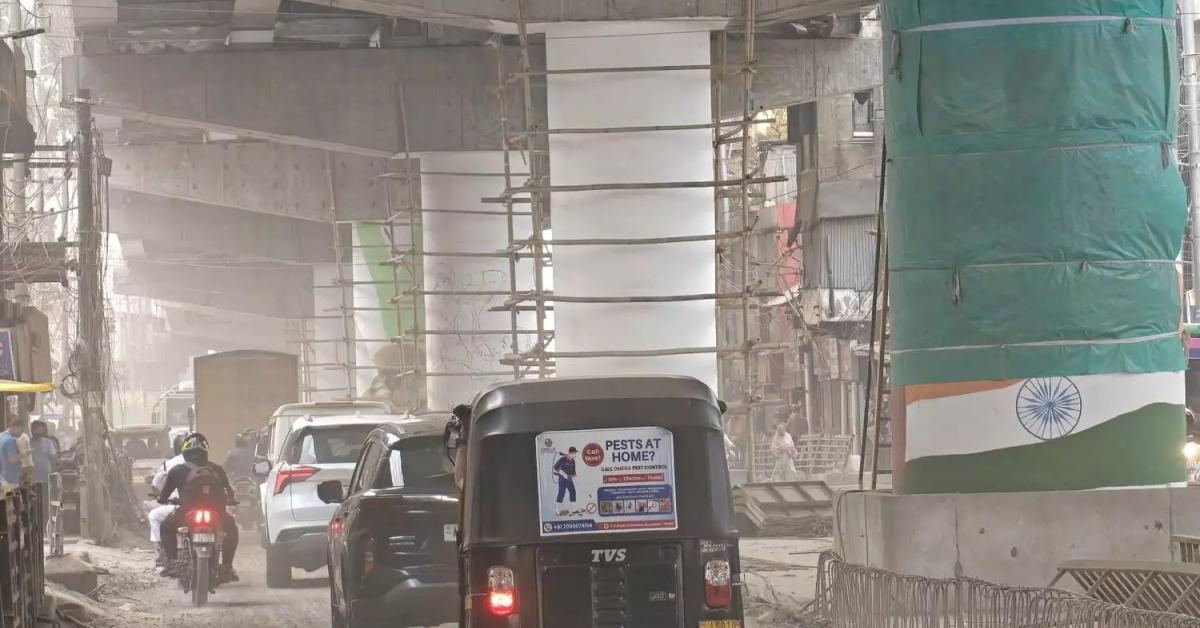

Air quality in Guwahati has deteriorated significantly this February, with the Air Quality Index (AQI) climbing to around 294 — placing the city firmly in the “poor” category and raising fresh concerns among health experts and residents.
Officials monitoring ambient air quality said pollution levels have fluctuated between “satisfactory” and “poor” throughout the month, but several days recorded AQI readings in the 200–300 range, indicating a worrying trend for the rapidly growing city.
Environmental experts attribute the decline primarily to dry weather conditions that prevent pollutants from dispersing. Ongoing construction activities, rising vehicular emissions and dust blowing in from the Brahmaputra riverbed have further aggravated the situation.
Data show particulate matter remains the dominant pollutant. PM10 levels are largely driven by dust and construction activities, followed by vehicle emissions and industrial sources. The more hazardous PM2.5 particles are mainly generated by vehicular pollution, with road dust and cooking emissions also contributing.
Scientists note that the January–March spike in pollution is a recurring seasonal pattern linked to dry, stagnant atmospheric conditions. They add that rainfall typically brings temporary relief by helping pollutants settle.
Certain localities, including Bamunimaidam, have reported sharper increases in pollution levels, partly due to inadequate dust-control measures such as water sprinkling at construction sites.
Health experts warn that prolonged exposure to fine particulate matter can lead to throat irritation, respiratory distress and long-term lung complications. Residents, especially children, the elderly and those with pre-existing respiratory conditions, have been advised to limit outdoor exposure during peak pollution hours and use protective masks when necessary.
With rapid urban expansion, increasing vehicle numbers and persistent construction across the city, experts caution that Guwahati could face sustained air-quality challenges unless stricter mitigation measures and dust-control practices are implemented.
- Log in to post comments