
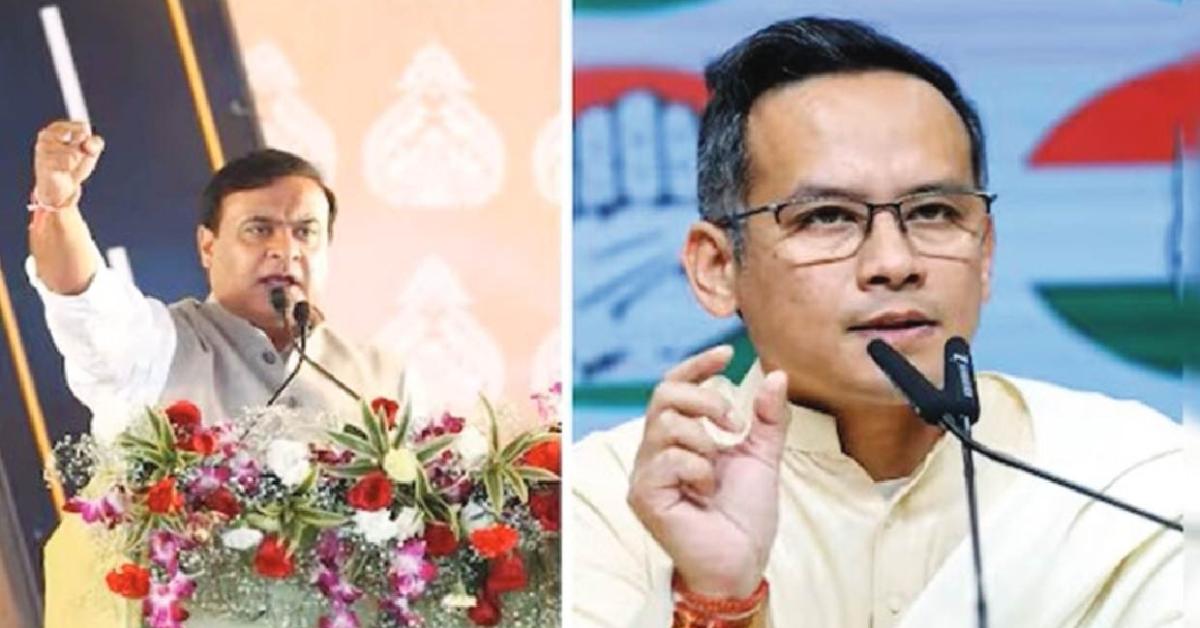

What began as a political controversy in Assam has now moved firmly into the realm of national security, with the Assam Cabinet deciding to hand over the investigation into Congress MP Gaurav Gogoi’s alleged Pakistan links to the Union Ministry of Home Affairs (MHA).
The decision, taken at a cabinet meeting chaired by Chief Minister Himanta Biswa Sarma, comes after months of inquiry by a Special Investigation Team (SIT) formed by the state government. According to officials, the SIT has gathered material it considers sensitive, but has reached a point where it can no longer move forward on its own.
“This is not a case the state police can handle alone anymore,” Sarma said, stressing that the matter involves foreign nationals, international travel, and a sitting Member of Parliament. Such elements, he argued, require access to central intelligence inputs and even international cooperation through agencies like Interpol — resources that lie beyond the state’s jurisdiction.
At the heart of the controversy are three individuals: Gaurav Gogoi, a Congress MP and prominent opposition leader in Assam; his British wife, Elizabeth Colburn Gogoi; and Ali Tauqeer Sheikh, a Pakistani national. The Chief Minister has repeatedly claimed that the alleged connections between them raise serious questions that must be examined from a national security perspective, not a political one.
For Gogoi, however, the allegations have been deeply personal. He has consistently rejected the claims as baseless and politically motivated, describing them as an attempt to malign him and his family. The Congress has echoed this view, accusing the BJP-led state government of using investigative agencies to target an opposition leader ahead of crucial political battles.
The cabinet’s decision means that the SIT report and all related documents will now be sent to the MHA, which will decide the future course of action. The Centre may choose to assign the case to a central agency such as the NIA or CBI, and determine whether Interpol’s assistance is required to pursue leads outside India.
For ordinary citizens watching the developments, the case has become more than a clash between political rivals. It raises uncomfortable questions about trust, transparency, and the fine line between national security and political rivalry. With the probe now moving to New Delhi, many in Assam are waiting to see whether the truth — whatever it may be — will finally emerge, or whether the controversy will deepen the state’s already sharp political divides.
- Log in to post comments