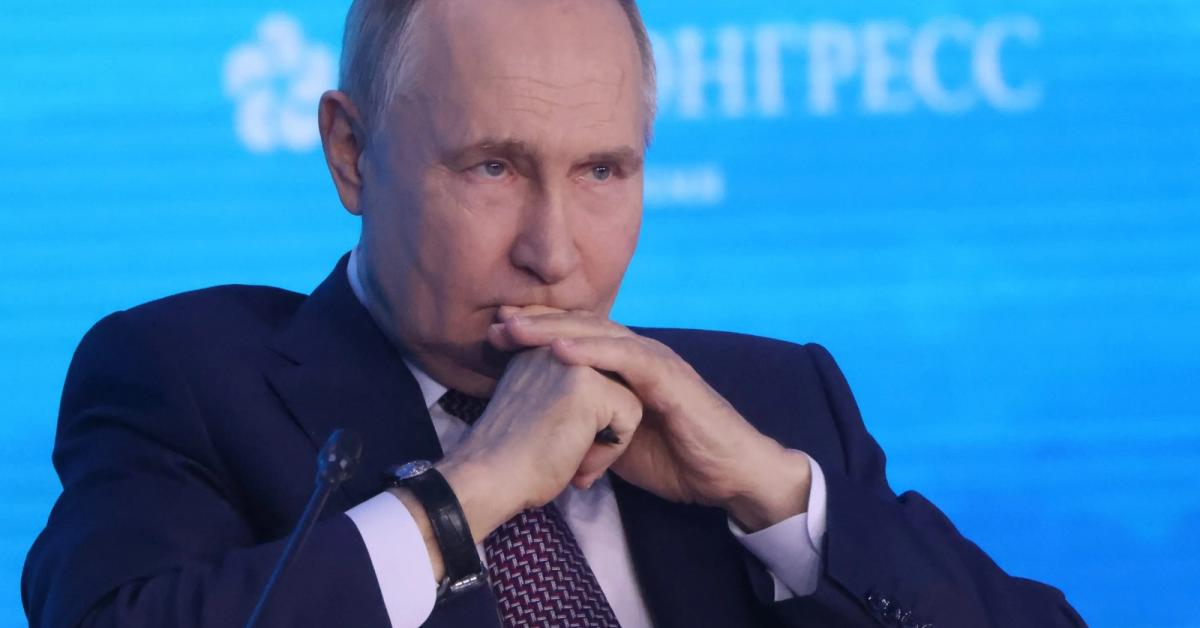

Russian President Vladimir Putin has said Russia could agree to use part of its state assets frozen in Western countries for the reconstruction of Ukraine, provided a peace agreement is reached to end the ongoing war, according to a report by The Hindu.
Speaking at a public interaction, Putin indicated that Moscow was open to discussing the use of frozen funds to help rebuild war-ravaged areas, but stressed that any such move would be contingent on a comprehensive peace settlement between Russia and Ukraine. He reiterated that Russia considers the freezing of its assets by Western nations illegal and politically motivated.
Since Russia launched its full-scale invasion of Ukraine in February 2022, the United States, European Union and other allies have frozen an estimated $300 billion worth of Russian central bank and state assets as part of sweeping sanctions. Western governments have debated whether these funds, or the interest generated from them, could be used to finance Ukraine’s reconstruction.
Putin said Russia could accept the use of some of the frozen assets for rebuilding efforts after a peace deal, but suggested that the funds should be directed primarily toward reconstruction in territories affected by the conflict, without elaborating on the mechanisms or oversight involved.
Ukraine and its allies have consistently argued that Russia should pay reparations for the destruction caused by the war, and Kyiv has called for frozen Russian assets to be transferred to Ukraine as compensation. Western leaders have so far stopped short of fully confiscating the assets, citing legal complexities, though some have approved the use of profits earned from the frozen funds to support Ukraine.
Putin’s remarks come amid renewed international discussions on possible diplomatic pathways to end the conflict, which is approaching its fourth year. However, Ukrainian officials have previously rejected conditional offers tied to territorial concessions or other Russian demands.
The statement is seen as part of Moscow’s broader diplomatic messaging, as debates continue globally over accountability, reparations, and the legal fate of frozen Russian assets once the war ends.
- Log in to post comments