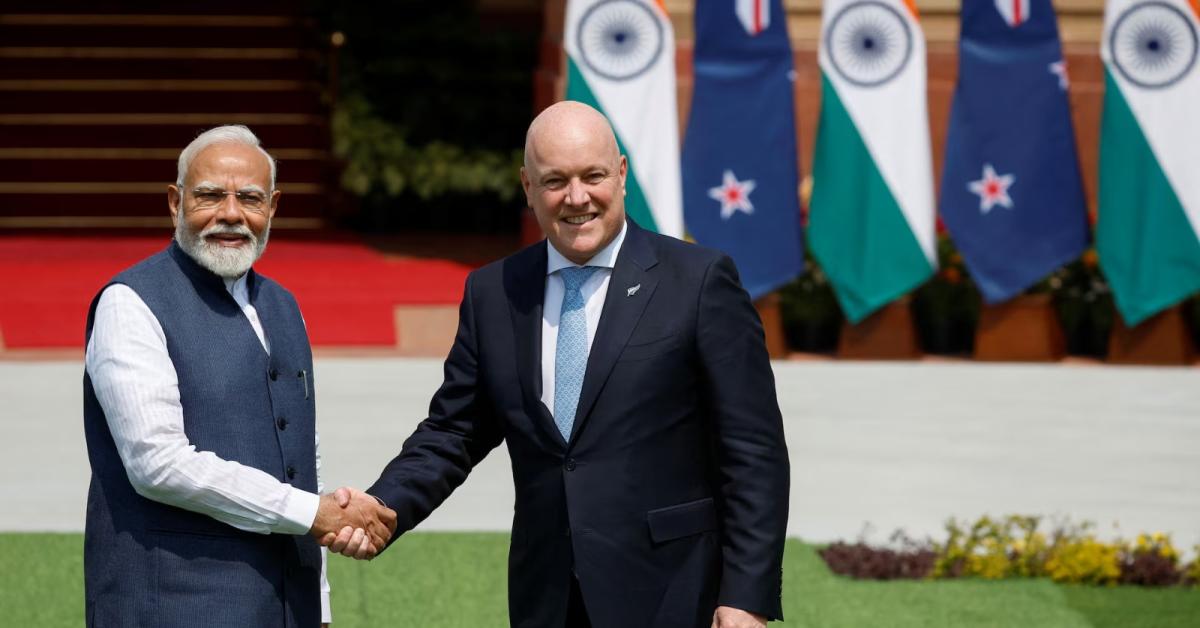

New Zealand and India have concluded negotiations on a long-awaited free trade agreement (FTA), marking a significant step in strengthening economic ties between the two countries, New Zealand officials said on Monday.
Under the agreement, tariffs on a large majority of goods traded between the two nations will be reduced or eliminated. Around 95 per cent of New Zealand’s exports to India will benefit from lower tariffs, with more than half gaining immediate duty-free access once the pact comes into force. Key New Zealand exports such as forestry products, wool, apples and kiwifruit are expected to gain improved access to the Indian market.
The deal also includes provisions on the temporary movement of people, allowing for a limited number of skilled work and working-holiday visas annually, aimed at boosting business links and people-to-people ties.
New Zealand Prime Minister Christopher Luxon described the agreement as a major breakthrough, saying it would create new opportunities for exporters, support jobs and deepen engagement with one of the world’s fastest-growing major economies. Trade Minister Todd McClay said the pact demonstrated New Zealand’s commitment to open and rules-based trade at a time of global economic uncertainty.
India, which has been selectively pursuing trade deals in recent years, said the agreement would help expand bilateral trade and investment while safeguarding sensitive domestic sectors. Officials indicated that the full legal text would be released after completion of technical and legal reviews.
Bilateral trade between India and New Zealand was valued at about NZ$3.1 billion (around $2 billion) last year. India exports pharmaceuticals, textiles and engineering goods to New Zealand, while importing agricultural and forestry products.
The agreement is expected to be formally signed in 2026, subject to domestic approval processes in both countries. In New Zealand, the pact will need parliamentary scrutiny, where some political groups have raised concerns over immigration provisions and the impact on local industries.
Analysts said the FTA would help diversify trade for both countries and strengthen their economic partnership in the Indo-Pacific region, even as global trade faces growing geopolitical and protectionist pressures.
- Log in to post comments