
India’s ancient Aravalli Hills, one of the world’s oldest mountain ranges, have become the focus of growing protests across northern India, with environmentalists, local residents and opposition leaders raising alarm over what they see as weakening legal protections for a fragile ecological zone, according to a report by BBC News.
The controversy centres on a recent legal interpretation and court ruling that defines which landforms qualify as part of the Aravalli range based largely on height and clustering of hills. Critics argue that this definition could exclude large stretches of the Aravallis—particularly low-lying ridges, slopes and foothills—from environmental safeguards, potentially opening the door to mining, construction and real estate activity.
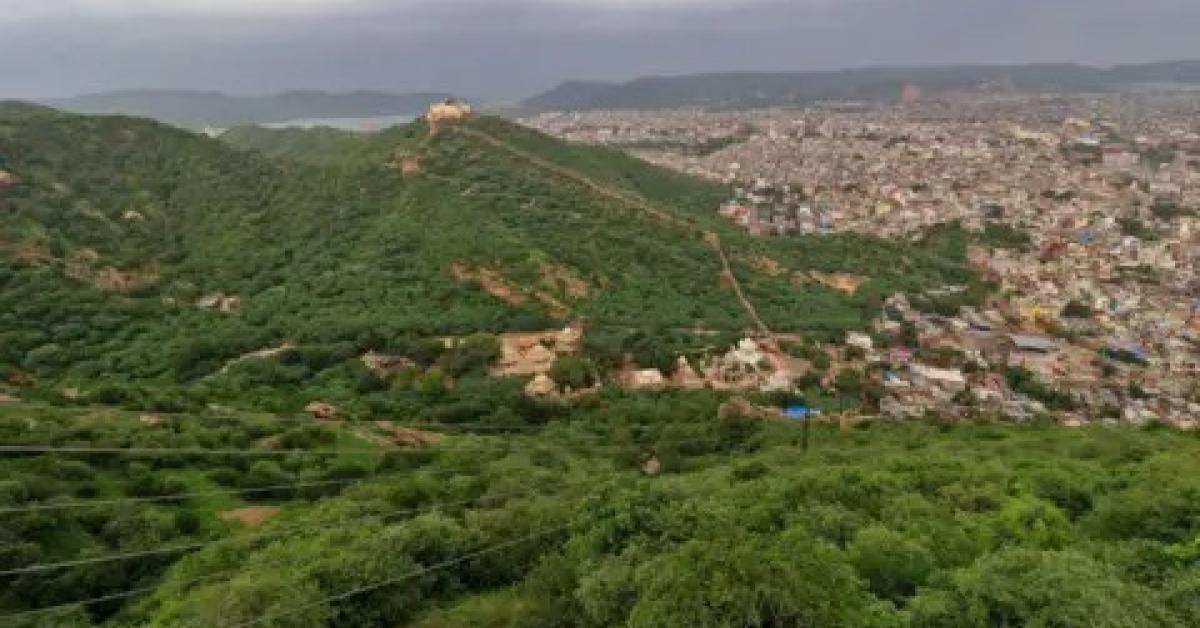
Stretching across Gujarat, Rajasthan, Haryana and Delhi, the Aravalli Hills play a crucial ecological role. They act as a natural barrier against the spread of the Thar Desert, help recharge groundwater, reduce air pollution and support diverse flora and fauna. Environmental groups warn that even seemingly minor changes in legal definitions could have serious long-term consequences for water security, biodiversity and climate resilience in the region.
Protests have been reported from several cities, including Gurugram, Jaipur and Udaipur, where demonstrators have called for comprehensive protection of the entire Aravalli landscape rather than selective safeguards based on elevation. Activists say the hills should be viewed as an interconnected ecosystem, not as isolated peaks.
The issue has also sparked a political row, with opposition leaders accusing the Centre of diluting environmental protections in favour of development and commercial interests. They argue that the revised interpretation contradicts earlier court orders and scientific understanding of the Aravallis’ ecological importance.
The Union government, however, has rejected these claims, saying the move is being misrepresented. Officials maintain that most of the Aravalli region remains protected and that the clarification is aimed at improving regulation and preventing illegal activities, not encouraging mining or unchecked development.
Despite these assurances, environmentalists remain unconvinced. They warn that once protections are relaxed, even marginally, enforcement becomes difficult and irreversible ecological damage could follow.
As protests continue and debates intensify, the future of the Aravalli Hills—estimated to be over two billion years old—has emerged as a symbol of the broader tension between development and environmental conservation in India.
- Log in to post comments